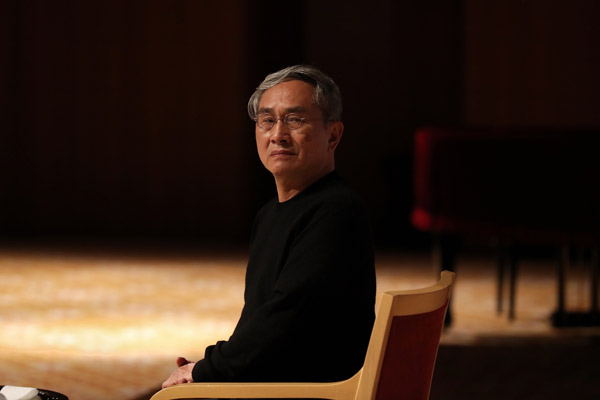
Lin Hwai-min
Introduction
Lin Hwai-min, from Taiwan province, is an internationally celebrated choreographer and the founder of the renowned contemporary dance company, Cloud Gate Dance Theatre. Established in 1973, Cloud Gate has brought Lin's unique artistic vision to the global stage, blending traditional Asian aesthetics with contemporary dance. His innovative works have earned him numerous accolades, including the Ramon Magsaysay Award, the Samuel H. Scripps/American Dance Festival Award, and recognition as one of Time magazine's "Asia’s Heroes" in 2005. Lin's choreographies draw heavily from his multicultural background and are considered transformative in the evolution of Asian dance.
Early Life and Education
Lin's artistic journey began with literature; by the age of 22, he had published two bestselling novels. Despite initial familial expectations for a conventional career, his fascination with dance was sparked by the film The Red Shoes. Lin pursued his passion in the United States, earning a Master of Fine Arts from the Iowa Writers' Workshop and simultaneously studying modern dance. This dual exposure to writing and movement deeply influenced his choreographic approach, emphasizing storytelling through the body.
Founding Cloud Gate Dance Theatre
In 1973, Lin established Cloud Gate Dance Theatre, naming it after the oldest recorded Chinese dance. The company represents a pioneering effort in the Chinese-speaking world to create contemporary dance. Lin developed a signature style by integrating elements from traditional Chinese opera, martial arts, tai chi, and calligraphy with modern dance and ballet. Critics have praised Cloud Gate for its "magical and beautiful" performances, with dancers possessing a control and expressiveness that blur the lines between stillness and motion. The company has performed at prestigious venues worldwide, from the Barbican Centre in London to the Next Wave Festival in New York.
Artistic Features and Legacy
Lin's choreographic works often explore themes of identity, culture, and spirituality, deeply rooted in Asian traditions. His 1978 masterpiece Legacy retells the struggles and aspirations of Taiwan's pioneers, blending acrobatics and traditional Chinese dance with symbolic representations of physical labor. Other works, such as the Cursive trilogy, are inspired by Chinese calligraphy, translating the fluidity of brushstrokes into dance movements. Lin's creations are celebrated for their profound cultural resonance and innovative merging of historical and contemporary influences.
Lin also emphasized making dance accessible. His outdoor performances in Taiwan regularly draw tens of thousands of spectators. Through his efforts, Cloud Gate has not only garnered international acclaim but also enriched the cultural landscape in Taiwan, with honors such as having a lane in Taipei named after the company.
Recognition and Influence
Lin's contributions have reshaped the global perception of contemporary dance in Asia. Described as a "foremost innovator" by Dance Europe, Lin has been compared to luminaries such as Merce Cunningham and Pina Bausch. His works continue to influence choreographers worldwide, blending the introspection of Eastern philosophies with the dynamic techniques of Western dance. As a mentor in programs like the Rolex Mentor and Protégé Arts Initiative, Lin nurtures emerging talents, ensuring his legacy as an artist and educator endures.
With a career spanning decades, Lin Hwai-min remains a trailblazer in contemporary dance, using the universal language of movement to bridge cultures and redefine artistic boundaries.








